

What Are CEFR Levels? A Clear and Honest Explanation for German Learners and Parents
If you’ve seen A1, A2, B1, B2 (or even C1/C2) and wondered what that really means, this post explains it in plain English — and how it connects to real learning.
Quick summary (if you just want the basics)
CEFR is a framework that describes language ability from A1 to C2. It doesn’t decide when you start speaking — students speak early and build confidence step by step. Over time, they gain more control, range, and comfort.
On this page
- What is the CEFR?
- CEFR levels overview (A1–C2)
- A1: Beginner
- A2: Elementary
- B1: Intermediate
- B2: Upper-intermediate
- Why learners feel stuck (A2 → B1)
- How German4FUN uses CEFR in real learning
- FAQs
What is the CEFR?
CEFR stands for Common European Framework of Reference for Languages. It’s an internationally recognized system that describes language proficiency in a structured and comparable way. Instead of vague labels like “beginner” or “advanced,” CEFR describes what learners can realistically do across listening, speaking, reading, and writing.
If you want the official background, you can also read the Council of Europe’s CEFR overview here: CEFR (Council of Europe).
CEFR levels overview (A1–C2)
The CEFR levels go from A1 (foundation) to C2 (near-native mastery). Most learners spend the majority of their journey somewhere between A1 and B2. The important part is this: CEFR levels describe depth and control, not “you can’t speak yet.” Speaking starts early and becomes more flexible over time.
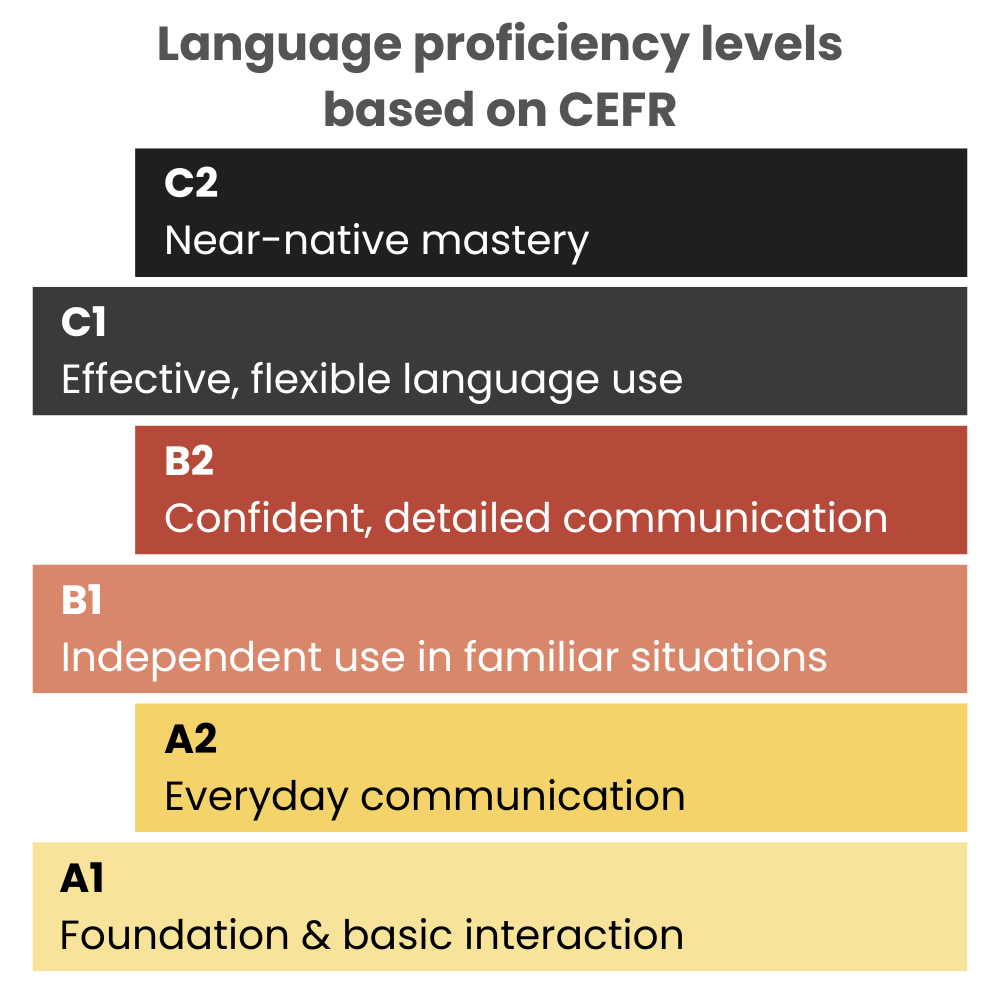
What CEFR levels are (and what they are not)
CEFR levels are often misunderstood. They are not a rule that says, “You can speak now” or “You’re not allowed to speak yet.” They also don’t describe how motivated someone is, how confident they feel, or how fun a class is.
CEFR levels describe range, accuracy, and flexibility. As learners progress, they gain more control. But speaking starts early. Students build and say real sentences long before higher levels, and that is exactly how learning should feel.
A1 – Beginner: building the foundation and speaking from day one
A1 is where learners build the foundation for everything that follows. This level is not about memorizing greetings and moving on. It’s about understanding how German sentences work and using them actively.
At A1, students begin forming their own sentences using present tense verbs and basic word order. They learn how to ask questions, respond to simple prompts, and talk about familiar topics such as themselves, daily routines, preferences, and everyday needs. Speaking at this stage is slow and imperfect, and that is completely normal. Confidence grows with every lesson.
A2 – Elementary: expanding communication and growing confidence
At A2, learners already use German actively and begin to feel more comfortable doing so. This level expands what they can say and understand in everyday situations.
Students speak in longer sentences, participate in short conversations, and start talking about past experiences and future plans. Mistakes still happen often, but communication works. Many learners realize here that they don’t need perfect German to be understood — and that realization is a huge confidence boost.
B1 – Intermediate: speaking becomes independent
B1 is an important transition. Learners move from supported communication to more independent language use. They can hold conversations with less searching for words, explain opinions in simple terms, and participate actively in discussions on familiar topics.
At this level, students understand the main points of longer conversations and texts even if not every detail is clear. German starts to feel like something they can actually use outside the classroom with more ease.
B2 – Upper-intermediate: confidence, precision, and flexibility
At B2, learners communicate with a high level of confidence and flexibility. They can participate fully in conversations, express nuanced opinions, and understand more complex spoken and written language.
This level supports German use in professional, academic, and social contexts. Mistakes still occur, but they usually do not interrupt communication. German feels like a usable tool rather than a constant challenge.
Why many learners feel stuck between A2 and B1
One of the most common learning plateaus happens between A2 and B1. This is not because learners are failing. It happens because the language becomes more complex and requires more active production.
Moving from understanding to expressing ideas independently takes time, practice, and structured guidance. With the right approach, this phase becomes a natural step forward instead of a frustration point.
How German4FUN uses CEFR in real learning
At German4FUN, CEFR is not treated as a checklist or a marketing label. I use it as a guiding framework to create clear progress, realistic expectations, and lessons that feel practical and encouraging.
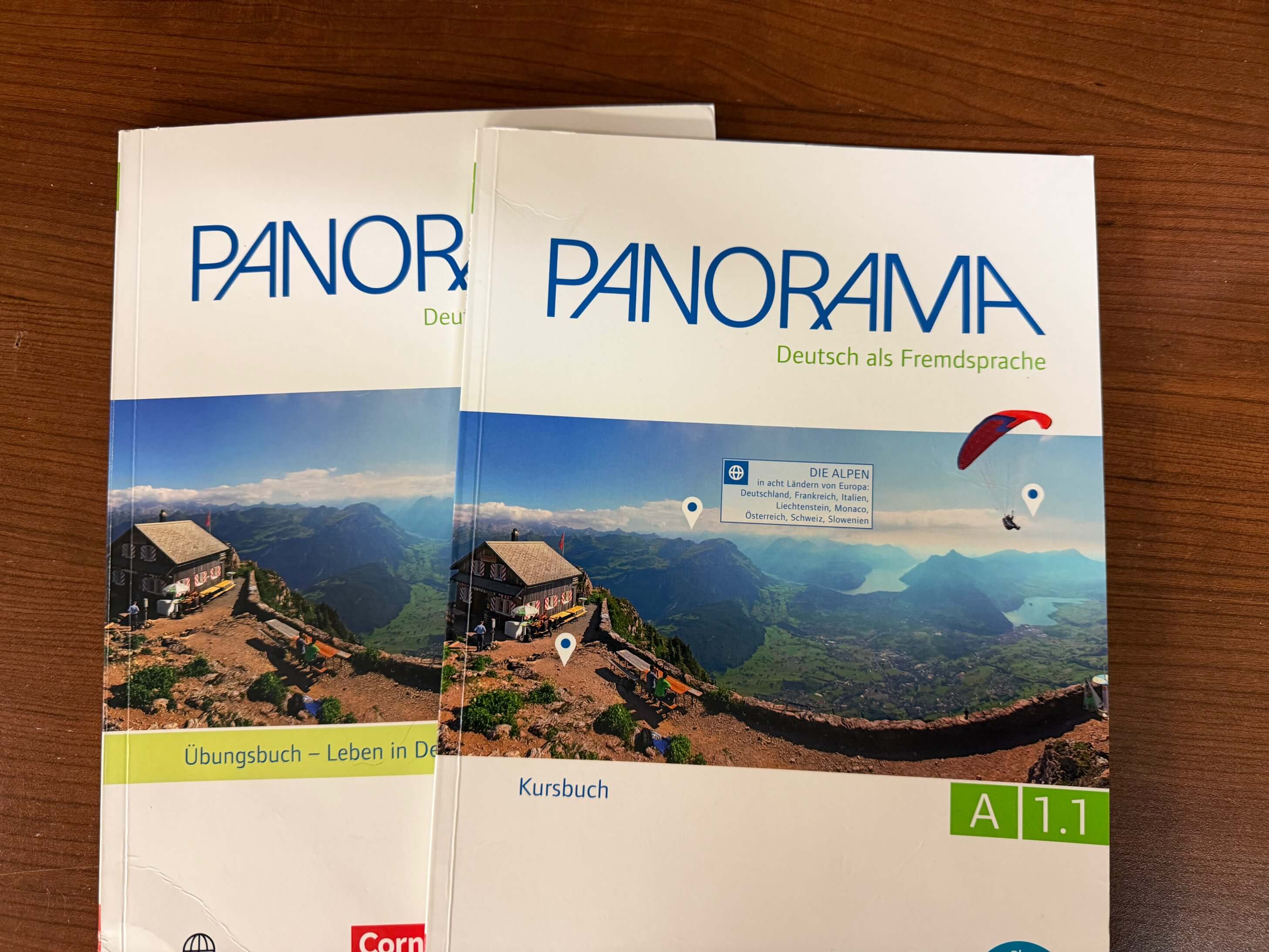
I also use course books that are fully based on CEFR. That matters, because it means the content, progression, and expectations align with official CEFR standards. When students complete a level, they are genuinely prepared for that level, not just “kind of familiar” with it.
Some students choose to take official CEFR-based exams and others do not, and both paths are completely fine. For students who want that option, I prepare them at the end of a level with practice-style tests so they understand the format and feel confident. That way, if they decide to take a real exam later, they know what to expect.
FAQs
When do students actually start speaking German?
Students start speaking German from the very first lessons. CEFR levels describe depth and control, not when you are “allowed” to speak. Speaking starts early and becomes more flexible and confident over time.
How long does it take to complete a CEFR level?
There is no single timeline that fits everyone. Progress depends on lesson frequency, practice, goals, and the learner’s age. What matters most is building a solid foundation and feeling confident at each stage.
Do students need to take official CEFR exams?
No. Exams are optional. Some students enjoy having a formal certificate, others simply want to speak German confidently for travel, school, work, or personal reasons. Both paths are valid, and CEFR-aligned learning supports either goal.
Are CEFR levels the same for adults, teens, and children?
The level definitions are the same, but how they are taught should be adapted to the learner’s age, goals, and learning style. Good teaching makes CEFR feel practical and motivating at every stage.
What if I don’t know my CEFR level yet?
That’s very common. A short placement chat or a trial lesson usually makes it clear where to start. Starting at the right level helps learning feel smoother and more enjoyable.
Final thoughts
CEFR levels are meant to provide clarity, not pressure. When used correctly, they help learners see where they are, understand what comes next, and recognize progress along the way.
At German4FUN, the goal is not to rush through levels. The goal is to help students build confidence step by step, speak early, and keep growing steadily. German is learned by using it — not by waiting until everything is perfect.
Want help finding your level?
If you’re not sure where to start, send me a quick message. I’ll help you choose the right level and the best next step (online or in Pensacola).
Prefer homeschool options? Homeschool German details
 German4FUN | Learn German in Pensacola & Online
Leave a comment