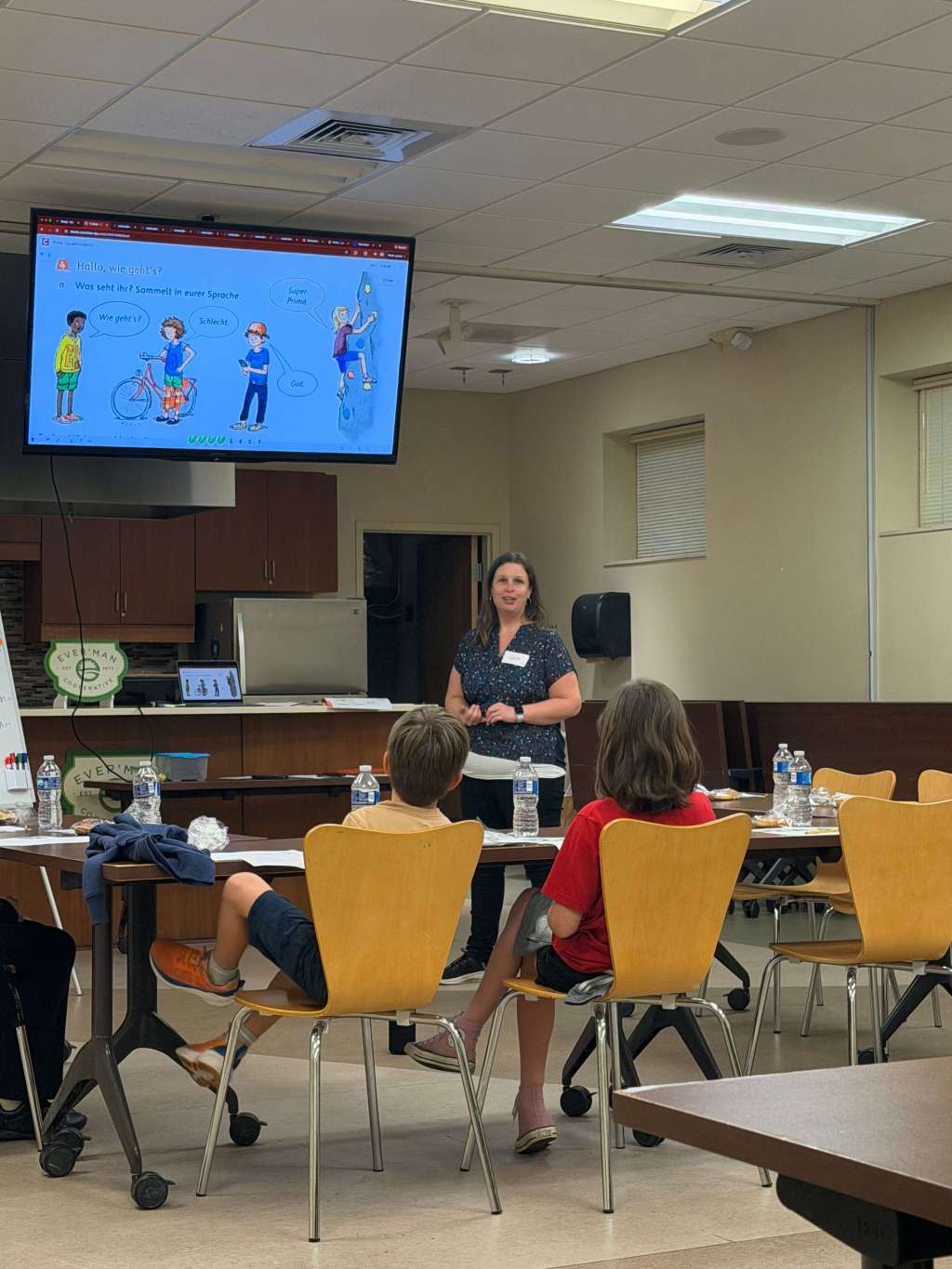
This is one of the most common questions people ask before starting: How long does it take to learn German?
But usually, what people really mean is something deeper.
Will I actually stick with it?
Will I make real progress?
Is this realistic for me or my child?
The honest answer is that there is no single fixed timeline. German learning depends on the learner, the lesson frequency, the work done between lessons, and the consistency over time.
The honest answer: it depends on how you learn
The timeline is not fixed. It depends almost entirely on your consistency, your effort between lessons, and how often you practice.
For example:
One lesson per week (50 minutes)
With homework and vocabulary practice in between, reaching the next level can take around 1.5 to 2 years.
Two lessons per week
With regular practice, one level can often be reached in about 1 year.
The same principle applies to kids, teens, and adults, whether lessons are online or on-site.
The more consistently you engage with the language — even in small steps — the faster you progress.
What “Learning German” Actually Means
One of the biggest misunderstandings is what “learning German” actually means.
Being able to say a few sentences is not the same as having real conversations. Understanding grammar rules is not the same as speaking confidently. Memorizing vocabulary is not the same as using it naturally.
Progress happens in layers. At first, you build a foundation. Then understanding grows. Then speaking becomes more flexible. That is why learning German is a process, not a quick jump from beginner to fluent.
A General German Learning Timeline
Under consistent conditions, here is a general orientation. If you are not familiar with the language levels yet, you can also read: What Are CEFR Levels? (A1–C2) Explained .
A1 (Beginner)
At this stage, learners begin understanding basic sentence structure, greetings, simple questions, and everyday vocabulary.
This is where the foundation is built.
A2 (Elementary)
Here, learners begin handling more everyday situations and expressing themselves with greater confidence.
Conversations become a little easier and vocabulary expands.
B1 (Intermediate)
At B1, learners usually become much more independent. They can communicate more freely, understand more context,
and use the language more actively in real situations.
What Actually Determines How Fast You Learn
The biggest factor is not talent. It is consistency.
Learners who stay engaged every week, review vocabulary, complete homework, and actively use what they have learned will always progress faster than learners who only attend lessons passively.
A second important factor is lesson frequency. One lesson per week can absolutely work, but progress will naturally be slower. Two lessons per week usually create much better momentum.
Structure also matters. Random learning feels frustrating. A clear step-by-step path makes progress visible and sustainable.
And finally, feedback matters. Learners improve faster when they are corrected, guided, and encouraged regularly.
Kids, Teens, and Adults Learn at Different Speeds
Children, teenagers, and adults do not learn in the same way, and that is completely normal.
Children benefit strongly from repetition, routine, and playful interaction. Teens usually respond well to structure and clear explanations. Adults often bring motivation and life experience, but they also tend to overthink more.
This is why progress looks different for each age group. But the same principle still applies to all of them: the more consistent the engagement, the faster the learning.
What Slows People Down
Most learners do not get stuck because they are “bad at languages.” They get stuck because there is too little consistency, too little review, or too little active use of the language.
Relying only on lessons without doing anything between sessions slows progress. So does jumping from one learning method to another without following a clear path.
Fear of making mistakes can also slow people down. But mistakes are part of how language learning works.
What Progress Actually Feels Like
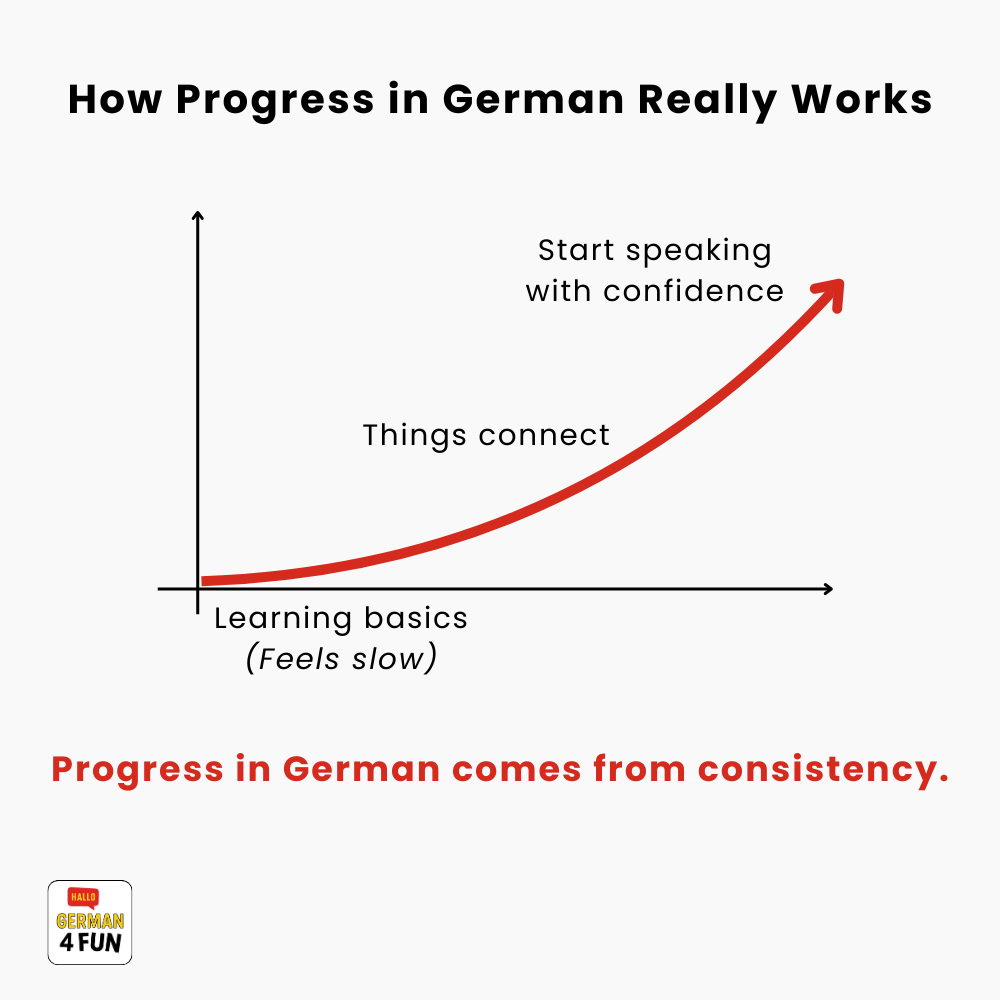
At the beginning, progress often feels slow. You are learning vocabulary, basic sentence structure, and new sounds. It may not feel dramatic at first.
Then, little by little, things start connecting. You begin recognizing more words, understanding more in context, and forming sentences more naturally.
Confidence does not appear overnight. It builds through repetition, exposure, and structured learning over time.
Why progress suddenly “clicks”
Many learners experience the same pattern.
At the beginning, progress feels slow. You learn vocabulary, basic sentences, and simple structures. It can feel like a lot of effort with little visible result.
Then suddenly, something changes. Words connect, sentences come more naturally, and understanding improves much faster.
This is not random. It is the result of consistent exposure and structured learning over time.
If you are also wondering whether online learning really works, you may find this helpful: Can You Really Learn German Online?
How German4FUN Supports Real Progress
At German4FUN, lessons are designed to be structured, supportive, and practical. The goal is not to rush through content, but to build real understanding and confidence step by step.
Learners are guided in a way that matches their age, pace, and goals, whether they are children, teenagers, or adults. German4FUN offers lessons locally in the Pensacola area and online across the United States.
FAQs
How long does it take to become fluent in German?
Fluency takes time and depends heavily on consistency, lesson frequency, and practice between lessons. Many learners reach conversational ability long before they feel “fluent.”
Can you learn German in 6 months?
You can make strong progress in 6 months, especially with consistent lessons and regular study between sessions. Reaching A1 or A2 may be realistic depending on the learner and the weekly workload.
Is German hard to learn for English speakers?
German has its challenges, but it is also one of the more accessible languages for English speakers because of shared roots and logical structure.
Curious about starting your German journey?
Whether you are exploring German for yourself or for your child, the best next step is to look at the available programs or get in touch. German4FUN offers structured German lessons locally in the Pensacola area and online across the United States.
 German4FUN | Learn German in Pensacola & Online
Leave a comment